


2026 has a better mood. The big cultural shift right now, call it underconsumption core, de-influencing, or just common sense. is about using what you already own and buying less, not chasing perfection. You don't need a pantry full of matching glass jars. You need a few swaps that genuinely fit your lifestyle. Progress beats perfection every time. Aim to reduce, not eliminate, and give yourself some grace along the way.
Before you make the swaps, try the following approach. It feels so much more doable than quitting plastic altogether.
1. Replace ONE plastic item from your daily routine.
Think about where plastic shows up the most in your daily routine? And remove one. WE can’t say it enough. One habit, done consistently, beats ten done occasionally. Are you a coffee addict? Do you take a packed lunch to work? Or maybe you’re still, dare we say it, purchasing water on your commute? Choose the one that feels achievable.
2. Make one swap per quarter.
When something runs out, replace it with a non-plastic version. We’re not encouraging more waste, simply replacing .No need to bin things that are still working. That's just four changes across the whole year.
3. Be prepared for the moments you can't predict.
Most single-use plastic isn't a conscious choice; it's a convenience choice. Keep a reusable cup in the car, a drink bottle in your bag, or a set of shopping bags in your boot. The easier it is to say yes to your reusable, the less often you'll need the disposable option.
We’ve listed 5 easy realistic plastic swaps to get you started:
1. Insulated reusable coffee cup:
If plastic sneaks into your day anywhere, it's your morning cup of joe. Keep a cup such as a Fressko in your bag, or next to your car keys or work desk. Out of sight, out of use.
2. Ditch plastic tea bags for loose-leaf.
Most tea bags are sealed with a fine layer of plastic, and studies have shown that steeping a single bag at brewing temperature can release billions of microplastic particles into your cup. Loose-leaf in an infuser flask, eliminates this. Alternatively, read your labels carefully.
3. Invest in a refillable water bottle.
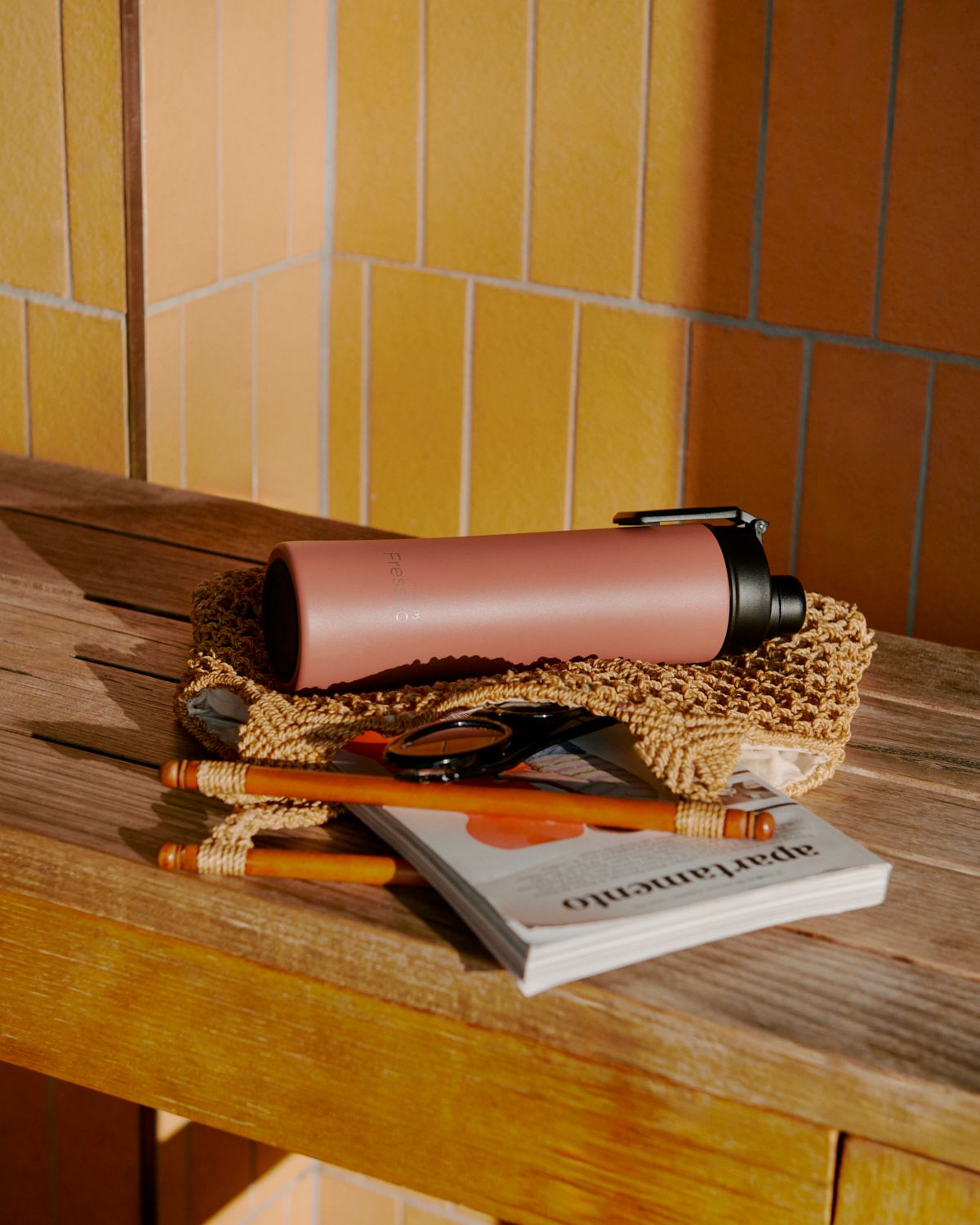
Bottled water is one of the biggest sources of microplastics in the average diet - with an estimated 240,000 particles per litre. Tap/filtered water from a decent bottle like this Fressko one is an investment, cutting hundreds of single-use bottles from your year. Once you start to look, you’ll notice water refill stations at even the most remote, unexpected places.
4. Use Wooden or Bamboo Chopping boards:
A 2023 study estimated that chopping on a plastic board can shed up to 50 grams of microplastics per person per year, roughly the weight of ten credit cards straight into your food. Wooden or bamboo boards are affordable, and last for years.
5. Go bar, not bottle.
Shampoo bars, conditioner bars, and the humble soap bar replace three plastic pump bottles with zero. Start with whichever runs out first. These days, many cleaning products come in dissolvable tablets or even sheet form.
You don't have to do all five. Pick one or two that fit the life you already live, and let them become automatic. That's how habits actually stick, which is a lot more sustainable, in every sense, than a perfect July followed by a plastic-heavy August.
For more information on changes you can make this Plastic Free July head to https://www.plasticfreejuly.org/